• Skip to primary navigation
  • Skip to main content
  • Skip to primary sidebar
  • Skip to footer
  • Advertise
  • Subscribe

Pneumatic Tips

Tips, Trends, Resources, News and Information

  • Blog
  • Industry News
  • Air Preparation
  • Engineering Basics
  • Components
    • Actuators
    • Cylinders
    • Fittings
    • Gears
    • Grippers
    • Pumps
    • Air Compressors
    • Tubing
    • Vacuums
    • Valves
  • Pressure Sensing
  • Design Guide Library
  • Classrooms
    • Pneumatics Classroom
You are here: Home / Air Preparation / Compressed air fail: Blowing reduction

Compressed air fail: Blowing reduction

July 27, 2022 By Paul Heney

Share
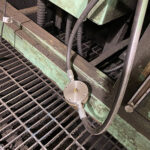
Fig. 1. This blowing application keeps the platen clean on an optical scanner.  The 30 cfm continuous flow was reduced by 99% by installing a timer to blow only 1 second every minute.

It is very common in an industrial facility to have compressed air blowing applications installed at various locations to provide cleaning of sensing eyes and scanners.  But it is important to keep in mind that this blowing demand can add up quickly — especially if there are many of these applications installed within the plant.

One thing about compressed air is that it is quite expensive for the mechanical force you get using a blow nozzle.  Another thing is that the cleaning action does not necessarily need to be continuous.

Consider the compressed air blowing device shown in Fig. 1.  This homemade pipe with holes drilled in it consumed 30 cfm continuously, costing about $5,800 per year to operate.  There were a total of four of these devices in the plant.

Experiments were done with this device, and it was determined a 0.5 second blast of compressed air every minute was sufficient to keep the scanner platen clean. A timer-controlled solenoid was installed to accomplish this action. Now, the average flow of this device has dropped by a factor of 120 — to only one-quarter of a cfm, saving $5,700 per year!

Plant personnel were impressed by the savings and are considering installing additional timer controls and special valves that can provide rapid pulsing on devices that need more or less continuous blowing.  Changing a continuous blow to one that pulse a few times per second, with 50% dwell between pulse can provide enhanced cleaning, due to the turbulence that is introduced, yet consume less compressed air, reducing the cost of operation.

Some possible sources for such valves are here:

SMC pulse blowing valve
Parker Hannifin air saving valve

Interested in seeing how this all works?  Go to this video to watch.

Continuous blowing is not always the best solution if compressed air must be used for cleaning.  The secret to optimization is controlling the duty cycle.


You may also like:


  • Compressed air fail: Flowmeter position

  • Compressed air fail: Frankenstein controls

  • Compressed air fail: The mystery filter

  • Compressed air fail: Dryer overload

Filed Under: Air Compressors, Air Preparation, Blog

Primary Sidebar

Fluid Power World Digital Edition

Fluid Power World Digital EditionBrowse the most current issue of Fluid Power World and back issues in an easy to use high quality format. Bookmark, share and interact with the leading design engineering magazine today.

RSS Featured White Papers

  • eBook: Practical Guide to Pneumatics
  • Saving energy and service cost with electric linear systems
  • White Paper-How to Design Efficient Pneumatic Systems!

Fluid Power Design Guides

fluid
“pt
EXPAND YOUR KNOWLEDGE AND STAY CONNECTED
Get the latest info on technologies, tools and strategies for Fluid Power Professionals.
Hose Assembly Tips

Footer

Pneumatic Tips

Fluid Power World Network

  • Fluid Power World
  • Hose Assembly Tips
  • Mobile Hydraulic Tips
  • Sealing and Contamination Tips
  • Fluid Power Distributor Lookup

PNEUMATIC TIPS

  • Subscribe to our newsletter
  • Advertise with us
  • Contact us
  • About us

Copyright © 2026 · WTWH Media LLC and its licensors. All rights reserved.
The material on this site may not be reproduced, distributed, transmitted, cached or otherwise used, except with the prior written permission of WTWH Media.

Privacy Policy