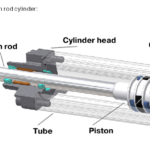
Contributed by Frances Richards Pneumatic cylinders, also called air cylinders, pneumatic actuators, or pneumatic drives, are relatively simple mechanical devices that use the energy of compressed air and turn it into linear motion. Lightweight and low maintenance, pneumatic cylinders generally operate at lower speeds and less force than their hydraulic or electric counterparts, but are […]
Engineering Basics
How do you specify pneumatic cylinders?
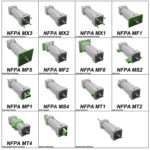
Contributed by Darryl Powell, Doc’s Hydraulic-Pneumatic Training LLC When specifying pneumatic cylinders, you may think that the most important information needed is the bore size and stroke. While these details are certainly important, the application’s requirements are more critical. For example, several questions should be considered: is the cylinder in a wet environment (maybe salt […]
Cutting compressed-air costs at the point of use

Energy efficiency has become a hot topic. There are worldwide initiatives to rein in CO2 emissions and limit climate change. Consumers are becoming critical and demand products that are produced in a sustainable way. Furthermore, many production plants are more aware of the huge cost reductions involved with energy savings. As a result, firms are […]
How to turn data into useful information

In a preview of their offerings at this year’s digital Hannover Fair, scheduled for April 12 to 16, Emerson takes a pragmatic look at today’s IoT landscape and discusses a number of new edge computing and analytics products that help manufacturers turn data into actionable insights. “We are 30 years into the concept of ‘big […]
What is a pneumatic muffler?

Pneumatic mufflers, also called silencers, safely and quietly vent pressurized air to atmosphere. They are commonly installed on air valves, cylinders, manifolds and fittings. Without a muffler, air exhausting from many types of pneumatic-powered equipment can be so loud as to be detrimental to the surrounding environment and potentially harm workers. Noise results when fast-moving, […]
What is a conical screw compressor?

A conical screw compressor is an offshoot of the conventional screw compressor. In a typical screw compressor, two meshing helical screws or rotors are mounted side-by-side in a housing. The rotors spin in opposite directions and draw air into the cavities between them. Volume decreases as air progresses along the rotors and compresses air, which […]
What is a scroll compressor?

Scroll compressors are positive-displacement devices that work by internal compression. Air (or other gas) is drawn in, trapped, reduced in volume and, finally, discharged at the outlet port. The concept of a scroll compressor has been around for more than a century, but it took more-recent advances in manufacturing technology to make the product viable. […]
What are alternatives to Cv for rating flow?

The flow capacity of valves, connectors and other components in pneumatic systems is often expressed in Cv. (See, “What is the flow coefficient Cv?“) However, other methods and standards are also available to express flow capacity. Here are some important alternatives. Sonic conductance In place of Cv, some manufacturers choose to publish the sonic conductance, […]
What is the flow coefficient Cv?

In the pneumatic industry, Cv is one standard for expressing the flow capacity of devices used in pneumatic systems. However, there are multiple other standards that also express flow capacity, including effective orifice size and normal liters per minute, as well as measurements of actual flow rates at specific pressure differentials. These methods are not […]
What is Class 0 air?

The international standard ISO 8573-1 (2010), “Compressed air — Contaminants and purity classes,” provides a classification system for the main contaminants in compressed air systems. The standard specifies a number of purity classes for compressed air with respect to particulates, water and oil, independent of the location in the compressed air system at which the […]
