• Skip to primary navigation
  • Skip to main content
  • Skip to primary sidebar
  • Skip to footer
  • Advertise
  • Subscribe

Pneumatic Tips

Tips, Trends, Resources, News and Information

  • Blog
  • Industry News
  • Air Preparation
  • Engineering Basics
  • Components
    • Actuators
    • Cylinders
    • Fittings
    • Gears
    • Grippers
    • Pumps
    • Air Compressors
    • Tubing
    • Vacuums
    • Valves
  • Pressure Sensing
  • Design Guide Library
  • Classrooms
    • Pneumatics Classroom
You are here: Home / Air Preparation / Compressed air fail: OSHA blow gun regulations

Compressed air fail: OSHA blow gun regulations

June 30, 2023 By Paul Heney

Share
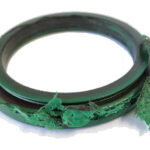
Fig. 1. Despite years of instruction, compressed air audits still find blow guns that fail to comply with OSHA regulations.

Despite being in force since the early 1990s, compressed air auditors frequently run across compressed air safety hazards when studying their client’s sites. Fig. 1 is a common example where blow guns installed for cleaning have been modified by machine shop personnel. This gun,  if the tip is blocked, will deliver over 100 psi to the tip. Should the blockage be a human, a potentially deadly embolism may be developed under the skin.

A quick internet search turns up some fatalities worldwide, usually caused by horseplay, causing death due to compressed air unexpectedly entering a person through various orifices. A gruesome thought.

Occupational Safety and Health Administration (OSHA) standard 29 CFR 1910.242(b) has long since been in force to prevent these occurrences, and requires that compressed air used for cleaning purposes must be reduced to less than 30 psig (pounds per square inch gauge, 204 kPa).

It also states that compressed air used for cleaning must only be permitted with effective chip guarding and personal protective equipment to protect the operator and other employees from the hazards of the release of compressed air and flying debris.

Standard 1917.154, which addresses similar hazards in the maritime industry, explicitly prohibits the use of compressed air for personnel cleaning. While this particular requirement is not specifically applicable in the general industry setting, OSHA recognizes it as good practice for all industries.

Industrial facilities with excellent safety practices address these safety hazards by ensuring all compressed air blowing, if needed is supplied by specialty nozzles that meet the OSHA requirements. Many outlaw personal blowing of compressed air to clean dust from clothing, opting instead to use low pressure electric powered cleaning stations that use low pressure compressed air sources, not only safe but also energy efficient.

Blowing devices designed to meet the OSHA requirements are plentiful and easily obtained. Don’t put your staff at risk by allowing inappropriate compressed air blow guns!

A nice guide to the OSHA blowing regulations appears here: osha.oregon.gov/OSHAPubs/factsheets/fs77.pdf
You may also like:


  • Compressed air fail: Strange CFM profile

  • Compressed air fail: Air dryer robbery

  • Compressed air fail: Two VSDs
  • Pneumatic cylinders seal failure
    Why do pneumatic cylinders fail?

Filed Under: Air Compressors, Air Preparation

Primary Sidebar

Fluid Power World Digital Edition

Fluid Power World Digital EditionBrowse the most current issue of Fluid Power World and back issues in an easy to use high quality format. Bookmark, share and interact with the leading design engineering magazine today.

RSS Featured White Papers

  • eBook: Practical Guide to Pneumatics
  • Saving energy and service cost with electric linear systems
  • White Paper-How to Design Efficient Pneumatic Systems!

Fluid Power Design Guides

fluid
“pt
EXPAND YOUR KNOWLEDGE AND STAY CONNECTED
Get the latest info on technologies, tools and strategies for Fluid Power Professionals.
Hose Assembly Tips

Footer

Pneumatic Tips

Fluid Power World Network

  • Fluid Power World
  • Hose Assembly Tips
  • Mobile Hydraulic Tips
  • Sealing and Contamination Tips
  • Fluid Power Distributor Lookup

PNEUMATIC TIPS

  • Subscribe to our newsletter
  • Advertise with us
  • Contact us
  • About us

Copyright © 2026 · WTWH Media LLC and its licensors. All rights reserved.
The material on this site may not be reproduced, distributed, transmitted, cached or otherwise used, except with the prior written permission of WTWH Media.

Privacy Policy