• Skip to primary navigation
  • Skip to main content
  • Skip to primary sidebar
  • Skip to footer
  • Advertise
  • Subscribe

Pneumatic Tips

Tips, Trends, Resources, News and Information

  • Blog
  • Industry News
  • Air Preparation
  • Engineering Basics
  • Components
    • Actuators
    • Cylinders
    • Fittings
    • Gears
    • Grippers
    • Pumps
    • Air Compressors
    • Tubing
    • Vacuums
    • Valves
  • Pressure Sensing
  • Design Guide Library
  • Classrooms
    • Pneumatics Classroom
You are here: Home / Air Preparation / Compressed air fail: Breathing air purifier

Compressed air fail: Breathing air purifier

September 25, 2023 By Paul Heney

Share
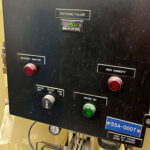
Fig. 1. This breathing air purifier uses an oversized carbon bed to remove hazardous gases from breathing air at a paint booth. Bottom left is a Carbon Monoxide detector that will alarm if CO is present in the purified air. This assembly uses no compressed air purge.

A metal process plant has two breathing air purifiers installed on site for the protection of its personnel. These units are installed to ensure hazardous Carbon Monoxide is kept out of breathing air. Recently, the two systems were evaluated by a compressed air auditor.

When paint fumes or metal particles are in the ambient air due to grinding and polishing, the staff are required to wear compressed air supplied breathing hoods to prevent them from inhaling these irritants. The trouble with compressed air supplied breathing air is that it is impossible to ensure the air the compressors ingest is free from hazardous gases.

For example, the exhaust from a service truck idling near the compressor room cooling air intake could allow carbon monoxide to enter the compressor intake and pass to the breathing devices. For this reason, regulations require breathing air to be monitored for the presence of carbon monoxide.

Many companies go further in protecting the workers, making sure the breathing air is well filtered to ensure it is clean of compressor lubricants, dust, and poisonous gases. In this plant two types exist, one using oversized carbon beds (Fig. 1) , the other using a special purifier with a catalyst that would crack any carbon monoxide into non-toxic carbon dioxide if any were present in the breathing air supply (Fig. 2). When one compares the operating costs of the two systems, the results are striking.

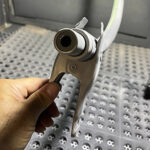
Fig. 2. This high-quality breathing air purifier has a catalyzing element that cracks Carbon Monoxide into CO2 if there is any present in the compressed air supply. These use desiccant dryers on the front end to protect the catalyst, which consumes a constant 65 cfm purge flow, costing $8,500 if not controlled.

The system in Fig. 1 uses no compressed air for its operation, so the compressed air costs are almost nothing. The other system uses about 65 cfm constant flow of compressed air that continues to use air — even if nobody is using breathing air. This compressed air demand costs $8,500 per year in equivalent compressed air costs.

The auditor checked the use of breathing air and found the utilization rate on this system was less than 1%.

Fortunately, an option to save operating costs can be purchased to control the purge flow, with an expected reduction in flow of 95%. This $3,500 option will quickly pay for itself in less than a year.

It pays to check out your compressed air system end uses!

You may also like:


  • Compressed air fail: Remote cooler install

  • Compressed air fail: Nozzles check

  • Compressed air fail: You forgot one thing

  • Compressed air fail: Strange CFM profile

Filed Under: Air Compressors, Air Preparation

Primary Sidebar

Fluid Power World Digital Edition

Fluid Power World Digital EditionBrowse the most current issue of Fluid Power World and back issues in an easy to use high quality format. Bookmark, share and interact with the leading design engineering magazine today.

RSS Featured White Papers

  • eBook: Practical Guide to Pneumatics
  • Saving energy and service cost with electric linear systems
  • White Paper-How to Design Efficient Pneumatic Systems!

Fluid Power Design Guides

fluid
“pt
EXPAND YOUR KNOWLEDGE AND STAY CONNECTED
Get the latest info on technologies, tools and strategies for Fluid Power Professionals.
Hose Assembly Tips

Footer

Pneumatic Tips

Fluid Power World Network

  • Fluid Power World
  • Hose Assembly Tips
  • Mobile Hydraulic Tips
  • Sealing and Contamination Tips
  • Fluid Power Distributor Lookup

PNEUMATIC TIPS

  • Subscribe to our newsletter
  • Advertise with us
  • Contact us
  • About us

Copyright © 2026 · WTWH Media LLC and its licensors. All rights reserved.
The material on this site may not be reproduced, distributed, transmitted, cached or otherwise used, except with the prior written permission of WTWH Media.

Privacy Policy