

Pneumatic valves are common in every industry, in applications from medical to chemical and automation to corrugation. Compressed air is readily available, clean and easy to use, so the number of markets taking advantage of this technology is no surprise. Two of the larger industries are automation—which uses cylinders and other actuators to produce or […]
A primer on pressure
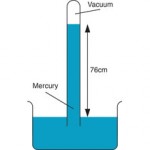
We fluid power industry professionals probably take pressure for granted. If I asked any of you to define pressure, you would say force over a predetermined area. We all typically use similar units, such as pounds per square inch (psi) or Newtons per square metre (Pa), but pressure isn’t confined for use in the fluid […]
Pneumatic servovalves use flux capacitors to enable high frequency response

One of the biggest difficulties in dealing with pneumatic motion control applications is the compressibility of air. Hydraulic fluid is also compressible, but the bulk modulus of liquid is so high that the compressibility is both very low and easy to calculate and control. On the other hand, air compresses inversely proportional to pressure, meaning […]
