
Smart technologies, from software-defined machines to digital integration, allow manufacturers to easily maintain machines and predict critical failures and faults before they cause downtime.
By Josh Cosford, Contributing Editor
The packaging industry operates in a world where ultra-high-speed machinery reigns, manufacturers accept razor-thin margins, and versatility is required as products change frequently. From high-speed form-fill-seal machines to complex end-of-line palletizing robotics, the machinery driving this sector has traditionally relied on conventional pneumatics.
Valued for their high power density, quick actuation, cost-effectiveness, and inherent safety in washdown environments, pneumatic systems have long been the technology of choice for packaging automation. However, traditional pneumatics operated as an open-loop technology blind to the digital age. When the PLC directs a valve to open, thereby routing air to the desired actuator, no data is provided to the factory regarding energy waste, seal wear, or whether excessive pressure is damaging blister packs or cardboard cartons.
Because the fast-paced packaging environment needs to be even faster, you can bet your bottom dollar that our industry would throw every buzzword at factories to improve throughput, reduce downtime, and provide insights to one-up every aspect of making boxes, bags, and packages. Advanced sensors, microprocessors, fieldbus, network connectivity, and edge computing have all been integrated to create sophisticated pneumatic systems that are many times more powerful and versatile than in the past.
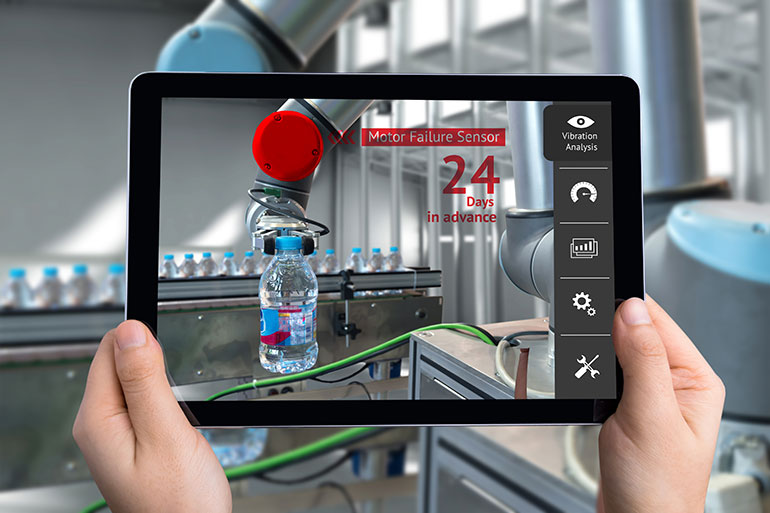
The marrying of pneumatics and Industry 4.0 has transformed traditional pneumatic actuators into intelligent, data-gathering platforms that can offer advanced control, predictive maintenance, and energy efficiency. To understand the impact on packaging, let’s examine how a smart pneumatic system works when you lift the proverbial hood.
Digital electronics make pneumatics smart
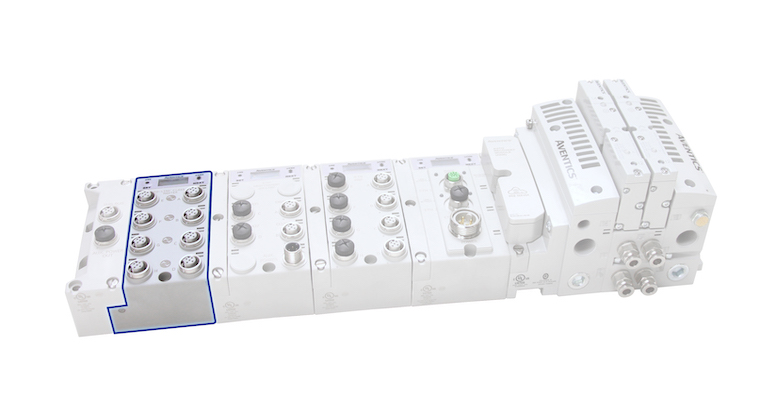
In traditional systems, a pneumatic valve is a simple on-off digital source of air. By contrast, a smart pneumatic system integrates digital electronics right at the component, manifold, and PLC levels. Smart directional control valves and cylinders, for example, are now equipped with embedded sensors that measure a variety of internal and external parameters in real time, including upstream supply pressure, differential pressure across cylinder chambers, and the volume of compressed air consumed per cycle.
“Smart” pneumatics means, in plain words, that the valves, manifolds, cylinders, motors, and air preparation devices are integrated with digital electronics (mini-computers and microprocessors) that can calculate cycle times, leakage rates, maintenance insights, and relay diagnostic data to other components, networks, or the cloud.
Perhaps the most radical shift is the introduction of software-defined pneumatics. Historically, changing a machine function required physically swapping out flow controls, regulators, or the cylinders themselves. With smart motion terminals, the same physical valve can alter its characteristics on the fly via software applications to suit changes in the operation or setup. By employing independently controlled proportional piezo valves unique to the rod and piston sides of a cylinder, software can dynamically vary pressure and flow to alter speed, force, and stroke length infinitely. The same hardware can function as a standard directional valve, a proportional pressure regulator, or a soft-stop cushioning device, entirely governed by computer software.

This capability directly targets overall equipment effectiveness, which is the gold standard metric in packaging operations. Unplanned downtime on a primary packaging line can cost thousands of dollars per minute in lost output and nonconforming product, and smart pneumatics helps minimize these impacts while improving first-pass yield through predictive maintenance.
Keeping an eye on failure points
Compressed air leaks are inherent to pneumatics, and packaging facilities are no different. They often occur at worn fittings, failed cylinder seals, or cracked airline plumbing, but legacy systems cannot detect a leak until it leads to a catastrophic failure.
Smart pneumatic manifolds continuously perform diagnostics during natural machine pauses by sealing off specific valve zones and measuring pressure decay over time to detect minute leaks long before they impact production. Furthermore, because the intelligence is localized at the manifold, the system can pinpoint the exact subplate valve and cylinder experiencing the leak, giving maintenance teams time to address the issue and plan scheduled maintenance rather than respond to an emergency breakdown.
The microprocessors in these components can also track wear rates because cylinders in packaging experience millions of cycles per month, causing internal seals to wear at a generally predictable rate. Smart pneumatics monitor cycle times and stroke lengths of individual actuators, so if the system detects that a cylinder is taking slightly longer to extend than it did a week earlier, despite identical pressure settings, it indicates an increase in mechanical friction or internal blow-by leakage. By alerting the maintenance team to the reduced cycle time, the component can be scheduled for service during planned maintenance windows, avoiding costly downtime.
Increasing productivity overall
This intelligence also unlocks flexibility for lines that must handle high product variety and frequent machine changeovers, enabling the production of various sizes, shapes, and materials on the same machinery. Traditional pneumatic changeovers are very time-consuming because maintenance technicians must install new fixtures and actuators, then manually adjust mechanical flow controls, and finally dial in pressure regulators to suit the subsequent setup.
Smart pneumatics eliminates the downtime between setups by using advanced preset management. When an operator selects a new “recipe” on the machine interface, the control system instantly updates the parameter profiles for every valve and actuator. Self-adjusting electronic control valves automatically adapt to changes in load, speed, and pressure, ensuring smooth deceleration regardless of the product running through the machine.
For precise tasks, such as arranging lightweight corrugated cardboard boxes or gripping thin-walled plastic bottles, smart pneumatics allows the machine to apply an exact, predetermined force that prevents product deformation while maintaining maximum speed. Previously, technicians would have to fiddle with adjustments during test runs to determine the appropriate settings.
These efficiency gains directly translate into sustainability and energy-reduction initiatives, which are as important as ever. Compressed air is one of the most energy-intensive utilities in a manufacturing plant because most of the electrical energy supplied to the plant and used by an air compressor is lost as pure heat during compression. Smart pneumatics optimizes this usage by regulating pressure based on demand, so in many packaging operations, a cylinder only requires maximum force in one direction, while the return stroke merely moves the empty actuator back to its starting position.
Previous systems supplied the same — often high — pressure for both stroke directions, but smart pneumatic systems can drop the pressure on the return stroke to the bare minimum required, yielding substantial energy savings. Additionally, when packaging lines experience downstream bottlenecks that cause upstream machines to idle, smart pneumatic systems recognize these situations and automatically switch to standby mode, dropping system pressure to a “hold level” or shutting off the air supply to those sections entirely. When the bottleneck is lifted, controllers then automatically repressurize and restart the system the moment downstream production resumes.

A connected system
The superpower of smart pneumatics is evident when the entire system connects to broader factory management architectures and cloud-based analytics platforms for data-driven quality control. In applications such as heat-sealing flexible pouches or capping bottles, the quality of the seal depends heavily on consistent pressure and dwell time. Smart pneumatics tracks these variables for every single cycle, and if a pressure drop occurs during the exact millisecond a sealing jaw closes, the smart valve flags that specific package as defective.
The machine can automatically trigger a reject gate downstream without stopping the entire line, ensuring that compromised products never leave the facility. Should subsequent failures occur in sequence, that portion of the machine will shut down automatically and send text messages to maintenance personnel, notifying them that their attention is required in the sealing area.
The widespread adoption of digital communication protocols such as IO-Link has been a major driver of this integration, enabling sensors and actuators to transmit rich diagnostic data to a master module over simplified wiring, thereby reducing machine build times, shrinking footprints, and lowering the cost of entry for implementing such smart technology.
The integration of smart technology into pneumatics has elevated pneumatic fluid power from a simple mechanical workaround to a core pillar of advanced digital manufacturing. Automation started many decades ago with the clever use of pneumatic valves, and we’ve come full circle, rewarding air power with ultra-modern technologies that carry the torch.
For the packaging industry, the benefits are clear: reduced unplanned downtime through predictive diagnostics, unprecedented machine flexibility via software-defined motion, and substantial energy savings that align with modern sustainability mandates. As artificial intelligence and machine learning continue to penetrate the factory floor, the data harvested by smart pneumatics will become even more valuable, ultimately leading to fully autonomous fluid power systems that continuously optimize their own performance parameters to achieve the lowest possible carbon footprint and the highest possible yield.
For packaging operators looking to maintain a competitive edge, smart pneumatics is no longer an optional upgrade but rather the path forward. Every visit to the big-box store or shipment arriving at your doorstep “same-day” means you can bet that smart technology was used in the preparation and delivery of that item. At no point in history has the packaging industry been more front and center, and smart technology is to thank for that fame.
