

By Josh Cosford, Contributing Editor
I’ve seen many pneumatic cylinders in my fifteen years in fluid power. From pancake to ISO and from NFPA to compact round line, there are as many types of air cylinders as there are applications for them. With so many cylinders and ways to use them, there are many ways to get them wrong. And when things go wrong, they need to be put right.
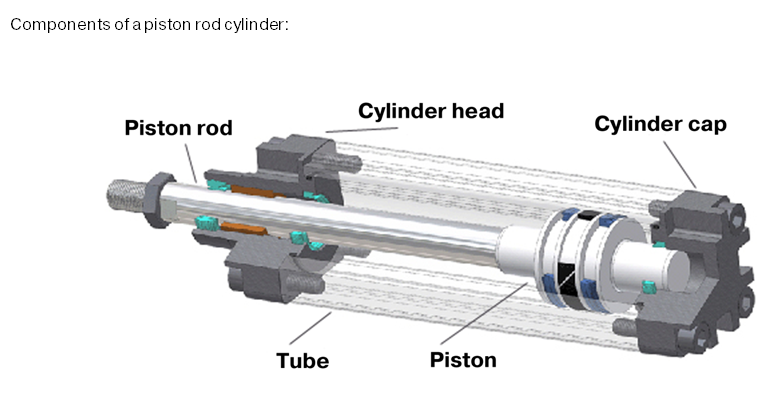
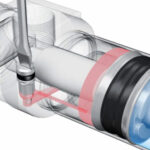
Image courtesy of Hafner Pneumatik
The most common pneumatic cylinder failure stems from the seals, most specifically the rod and piston seals. The dynamic nature of rod and piston seals means they experience friction, and with friction comes wear. Even the most well-lubricated seals wear over time, and although seals aren’t exactly consumable, you may expect them to wear regardless.
Most air cylinders arrive at our shop for repair with leaking seals but occasionally require other repairs or modifications. Sometimes side load forces create uneven wear across the bushing (if one exists) or the piston, necessitating the replacement of those items. Misalignment may also wear the piston rod unevenly, removing chrome or sometimes scratching the metal altogether when extreme wear of the bushing allows direct contact with the head.
Once a cylinder arrives for repair, it must be inspected to discover its symptoms, if not already known. Even if the customer describes the symptoms of the failure, sometimes additional failures are concomitant. Typically, if a cylinder looks okay at first glance, it’s likely in the shop for seal replacement. A quick pressure test reveals leakage from the rod seal or bypass across the piston seals.
So long as a cylinder needs to be opened up, the technician should replace all the seals. Air cylinder seals often cost little, often simply as a series of O-rings. Although small or inexpensive cylinders aren’t always worth the trouble to repair, doing it yourself can be justified when you stock O-ring kits and hand tools. Otherwise, paying a repair shop $120/hour to repair a $100 cylinder doesn’t always make sense.
Once the cylinder is apart, the remaining hard components may be inspected for wear, cracks or physical damage. The piston, rod, barrel and bushing operate dynamically, leaving an opportunity for scoring or damage. The piston should employ wear strips (also known as guide strips) as a low-friction sacrificial material. Although they improve the life of the cylinder dramatically, after many cycles, they do wear out. If that worn wear strip fails to separate the piston from the barrel ID, it may wear unevenly.
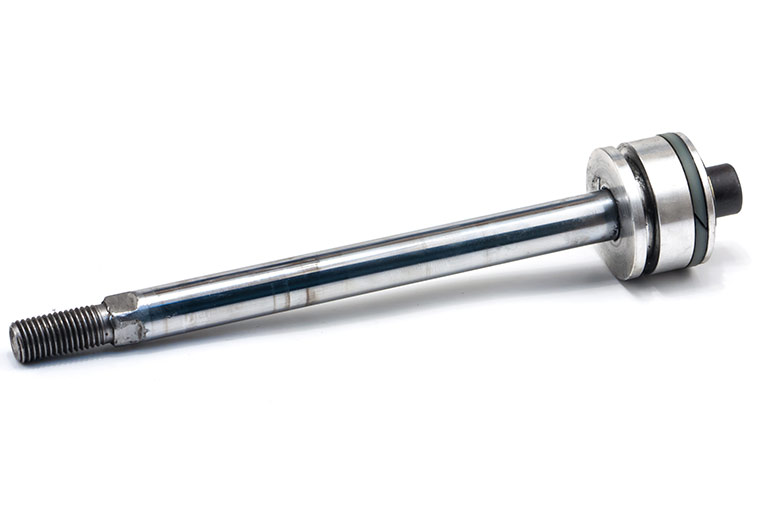
Of course, if the piston slides under contact with the barrel, expect the barrel to require servicing. If you’re lucky, the barrel may be honed to return the internal diameter to its ideal smooth, round finish. Should excessive wear prevent simple honing from doing the trick, the barrel ID may be first chromed to add a layer of material better suited to a fresh honing closer to its original dimensions. Too much clearance between the piston and barrel ID prevents the seal from doing its job.
The bushing not only supports the rod but also offers a sacrificial surface that wears in place of the head, which is more difficult to replace. It’s not uncommon to find oil-impregnated bronze used for bushings, which lubricates as it wears, although some manufacturers use a wear strip here as well. Sometimes pneumatic cylinders employ no bearing or wear strip at all, but those choices are rarely worth the effort of repair.
The piston rod often takes the brunt of abuse because it’s exposed to everything in the environment. From physical damage to humid environments, the rod may experience scratches, corrosion or excessive wear. After seals, the rod is the most frequently replaced cylinder part.
Once all the hard parts are replaced as needed, the cylinder may be assembled once again using new seals. Testing involves spraying soapy water around the rod seal, end seals (if required) and cushion pockets. Any bubbles forming signal a leak, and the cylinder must be disassembled again to inspect. The piston seals are checked by administering pressure to one port while checking for leakage air coming from the opposing port.
Although some cylinders are never meant to be repaired, just how much effort you should put into the repair of a cylinder depends on the cost of a replacement, the timeline of that replacement and your capacity to repair yourself. For heavy-duty air cylinders, there’s no reason regular maintenance won’t lead to an indefinite life span.


A very large number of pneumatic cylinders seem to be of the rolled-joint-non-repairable variety, although certainly seal replacement is a cheap and simple repair. I have not yet found a reasonable way to open these for repair so that they may be closed and used again.