• Skip to primary navigation
  • Skip to main content
  • Skip to primary sidebar
  • Skip to footer
  • Advertise
  • Subscribe

Pneumatic Tips

Tips, Trends, Resources, News and Information

  • Blog
  • Industry News
  • Air Preparation
  • Engineering Basics
  • Components
    • Actuators
    • Cylinders
    • Fittings
    • Gears
    • Grippers
    • Pumps
    • Air Compressors
    • Tubing
    • Vacuums
    • Valves
  • Pressure Sensing
  • Design Guide Library
  • Classrooms
    • Pneumatics Classroom
You are here: Home / Air Preparation / Compressed air fail: Ventilation

Compressed air fail: Ventilation

October 28, 2020 By Paul Heney

Share
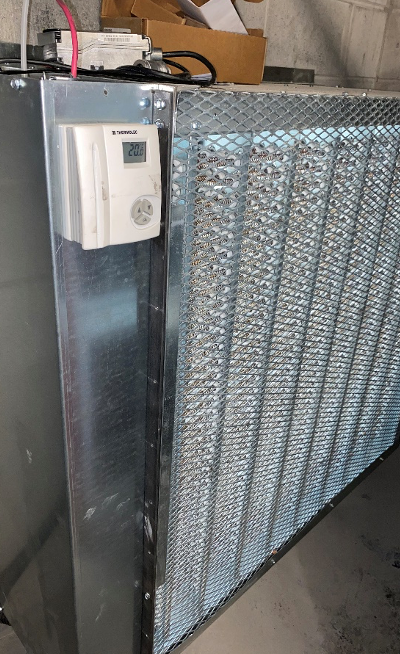
Figure 1. This 90-kW inlet heater, powered by expensive electricity, heats the ventilation air of a 75-kW compressor.

A metal products processor installed a new 75-kW VSD controlled air-cooled compressor in its plant — located in a separate compressor room.  The environment in the plant is full of aerosols produced by the process machinery cutting and milling process, so the ventilation system is the compressor room was updated to bring in 100% outside air to cool the compressor.  Use of this cleaner air will keep the compressor and its electronics clean, preventing contamination problems.

The plant is located in a part of the country where temperatures reach below freezing temperatures for six months of the year.  Because bringing in very cold air would cause the compressor coolers to freeze up, something had to be done to temper the air.

A heating contractor was called, and after some calculations based on the compressor cooling air flow, the contractor installed a large, 90-kW electric heater to condition the inlet cooling air.

A compressed air auditor was called to do efficiency measurements to verify the operation of the new compressor and found that even with inlet temperatures hovering about 32° F, the inlet heater was consuming more than twice the power as the air compressor, calculating to about $1,300 per month in electricity costs!
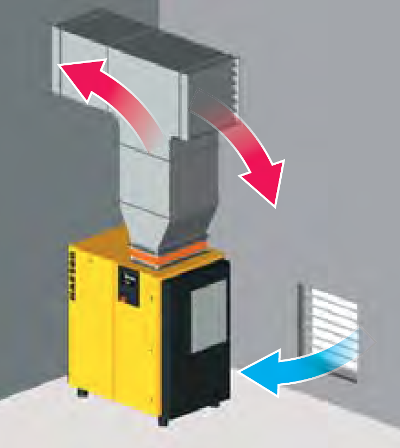
Figure 2. Compressor heat can be recovered to heat the incoming ventilation air Source: Kaeser Compressors.

The heating contractor was unaware that the waste compressor heat could be used to help condition the inlet air temperature and saving substantial heating costs (see Figure 2).  In the arrangement at left, only the small amount of air brought in from outdoors needs to be heated, the rest of the heat is provided by the air compressor.

Modifications are underway to correct the situation, and to send the compressor into the plant to supplement building heaters.
You may also like:


  • Compressed air fail: The spare dryer

  • Compressed air fail: Backflow problems
  • marshall duct tape
    Compressed air fail: Mighty duct tape
  • Marshall air dryer
    Compressed air fail: Dryer surprise

Filed Under: Air Preparation

Primary Sidebar

Fluid Power World Digital Edition

Fluid Power World Digital EditionBrowse the most current issue of Fluid Power World and back issues in an easy to use high quality format. Bookmark, share and interact with the leading design engineering magazine today.

RSS Featured White Papers

  • eBook: Practical Guide to Pneumatics
  • Saving energy and service cost with electric linear systems
  • White Paper-How to Design Efficient Pneumatic Systems!

Fluid Power Design Guides

fluid
“pt
EXPAND YOUR KNOWLEDGE AND STAY CONNECTED
Get the latest info on technologies, tools and strategies for Fluid Power Professionals.
Hose Assembly Tips

Footer

Pneumatic Tips

Fluid Power World Network

  • Fluid Power World
  • Hose Assembly Tips
  • Mobile Hydraulic Tips
  • Sealing and Contamination Tips
  • Fluid Power Distributor Lookup

PNEUMATIC TIPS

  • Subscribe to our newsletter
  • Advertise with us
  • Contact us
  • About us

Copyright © 2026 · WTWH Media LLC and its licensors. All rights reserved.
The material on this site may not be reproduced, distributed, transmitted, cached or otherwise used, except with the prior written permission of WTWH Media.

Privacy Policy