• Skip to primary navigation
  • Skip to main content
  • Skip to primary sidebar
  • Skip to footer
  • Advertise
  • Subscribe

Pneumatic Tips

Tips, Trends, Resources, News and Information

  • Blog
  • Industry News
  • Air Preparation
  • Engineering Basics
  • Components
    • Actuators
    • Cylinders
    • Fittings
    • Gears
    • Grippers
    • Pumps
    • Air Compressors
    • Tubing
    • Vacuums
    • Valves
  • Pressure Sensing
  • Design Guide Library
  • Classrooms
    • Pneumatics Classroom
You are here: Home / Air Preparation / Compressed air fail: Heed the warning

Compressed air fail: Heed the warning

July 16, 2019 By Paul Heney

Share
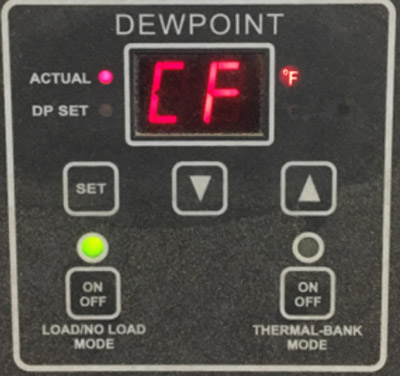
This code was warning operators of needed air dryer maintenance.

A wire manufacturer used a refrigerated air dryer to condition the air from their three compressors. The dew point required in the plant was near 35° F, and the maintenance staff were confident of the proper operation of the dryer — because the onboard dew point reading on the dryer control panel said that the readings was less than the specified level.

Yet, on occasion, their production personnel complained about water in the compressed air piping. This was strange, because the dryer constantly showed a good reading. How could this be?

A compressed air service provider was hired as part of an energy efficiency effort. One of the auditor’s checks was to ensure that all readings were good with the compressed air dryer and that internal components were operating correctly.

The auditor checked the air dryer drains. Pressing the test button, he noticed that one of the two dryer drains was passing excessive water — in fact, after 10 operations of the dryer test button, a flow of water was still flowing from the drain! A check of the actual dew point of the air at the dryer discharge with a portable meter showed that the dew point of the air was at 70° F — yet the dryer dew point display showed 34° F.
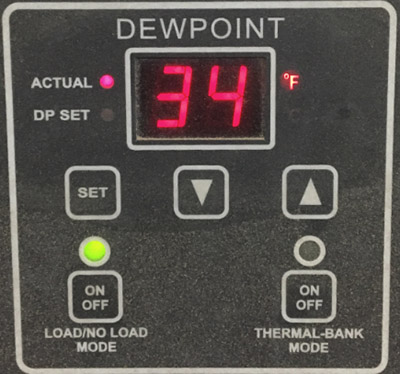
The dryer showed acceptable dew point yet moisture problems existed.

This dryer was a unit that used a cold coalescing filter to remove the water from the air stream within the dryer. A check of the manual showed a warning code CF that was flashing on the dryer display panel meant Change Filter.

The dryer filter was clogged and was not properly separating the water from the airstream, allowing moisture to pass through the dryer. Plant personnel had noticed the code but nobody bothered to look up the meaning.

It is important to realize that most refrigerated dryer dew point indicators show the temperature of the evaporator within the dryer, not the actual dew point produced. If the dryer separator or condensate drains are not doing their jobs, excessive moisture will pass undetected to downstream piping, with the potential to cause moisture problems.

The best protection against this type of problem is good maintenance — as well as installation of a secondary dew point probe with alarm at the discharge of the compressor room.
You may also like:


  • Compressed air fail: Hidden piping problems

  • Compressed Air Fail: Settings problem causes high unload hours
  • compressed air fail
    Compressed Air Fail: Control problem due to high flow events

  • Compressed Air Fail: Tale of two plants

Filed Under: Air Preparation

Reader Interactions

Comments

  1. Don Brock says

    July 18, 2019 at 2:15 pm

    Mt Henry where do I find the current
    Average cost of compressed air per 1000 CF
    Many YEARS ago is published @ .35 cents per 1000 cu ft
    Thank you for your answer

Primary Sidebar

Fluid Power World Digital Edition

Fluid Power World Digital EditionBrowse the most current issue of Fluid Power World and back issues in an easy to use high quality format. Bookmark, share and interact with the leading design engineering magazine today.

RSS Featured White Papers

  • eBook: Practical Guide to Pneumatics
  • Saving energy and service cost with electric linear systems
  • White Paper-How to Design Efficient Pneumatic Systems!

Fluid Power Design Guides

fluid
“pt
EXPAND YOUR KNOWLEDGE AND STAY CONNECTED
Get the latest info on technologies, tools and strategies for Fluid Power Professionals.
Hose Assembly Tips

Footer

Pneumatic Tips

Fluid Power World Network

  • Fluid Power World
  • Hose Assembly Tips
  • Mobile Hydraulic Tips
  • Sealing and Contamination Tips
  • Fluid Power Distributor Lookup

PNEUMATIC TIPS

  • Subscribe to our newsletter
  • Advertise with us
  • Contact us
  • About us

Copyright © 2026 · WTWH Media LLC and its licensors. All rights reserved.
The material on this site may not be reproduced, distributed, transmitted, cached or otherwise used, except with the prior written permission of WTWH Media.

Privacy Policy