

By Ron Marshall
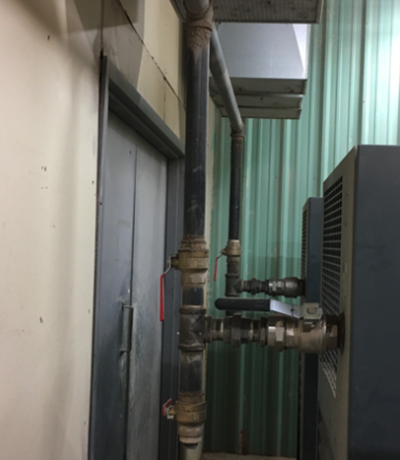
A grain processor was experiencing random dew point alarms on its air dryer. An air auditor called to investigate viewed the compressor room header piping and found an immediate problem. The piping installer had connected the discharge of each of their three compressors to the bottom of the compressor room header — this was done for simplicity … to reduce the cost of the installation.
The problem is this: the compressed air stream produced by air compressors is 100% saturated with water. Then the discharge air comes in contact with the cooler discharge piping, which is directly under cold air ventilation inlets. Thus, some moisture would condense out of the airstream and fall to the bottom of the pipe. The flow of air would propel the water along the bottom of the pipe where it would fall into the connection point of the next compressor, which happened to be normally shut down.
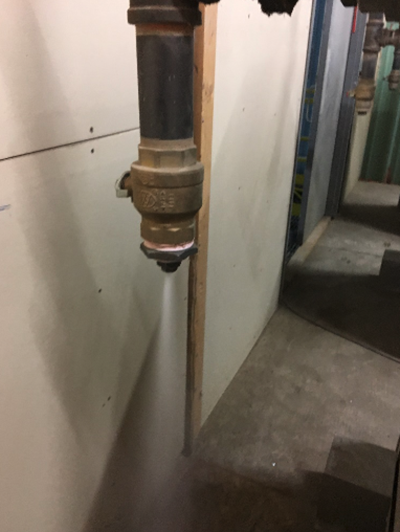
Drop by drop the compressor discharge pipe would fill up with a substantial amount of water, if a number of days passed, there would be enough to form a plug of water in the piping. A test was done at the compressor discharge by opening a ball valve (photo below) confirming large amounts of water. And, when the occasional plant peak called for the operation of this second compressor a slug of water would pass down the discharge piping and into the air dryer. Since the air dryer was not designed to process free water, some excess water would pass through, giving poor dewpoints.
Good piping design would ensure there is no possibility of water collecting in any low spots in the compressor header, this would require the compressor connection points to be at the top or at least the side of the header. The piping should be sloped slightly down and away from the compressor discharge, with a drain at the lowest point on the header. The header piping should typically be larger that the compressor discharge pipes, size big enough to present less than 30 feet per second velocity with all the compressors running. And the feed to the air dryer should also connect to the top of the header.
This design philosophy also holds true for plant piping to guard against the times the air dryer fails or must be taken out of service. Good control of condensate in the piping can guard against the contamination of sensitive pneumatic equipment or instruments, and may prevent unanticipated water contamination of your product.

Leave a Reply