Replacing linear pots with non-contact technology

March 29, 2011 by  
Filed under Featured, Positioning sensors

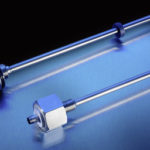
balluff3Resistive linear potentiometers are often used for position feedback in price-sensitive applications. However, since linear potentiometers rely on a contact-based operating principle, they often lack reliability and long-term performance. The Micropulse BIW, which replicates the form factor of traditional linear potentiometers, offers performance and reliability that linear potentiometers cannot. This is made possible by the Balluff-patented, non-contact, Pulsed-Inductive technology, which eliminates premature failure and performance degradation caused by mechanical wear. The Micropulse BIW, available in 0-20 mA and 4-20 mA versions, offers better noise immunity and allow longer cable runs compared to the linear potentiometer’s 0-10 V output signal. Other features include:

• Non-contact measurement technology for wear-free performance and long life
• Fast and easy drop-in replacement with its plunger style linear potentiometer form-factor
• Current output provides a more noise-immune signal

Typical resistive linear potentiometers are especially vulnerable to performance degradation caused by wear to the resistive element. Because the measurement principle relies on mechanical contact between the resistive element and conductive wiper, mechanical wear can lead to erratic output signals and, ultimately, unreliable process control. The Micropulse BIW linear position sensor solves these problems by incorporating noncontact, pulsed-inductive technology into a familiar, plunger style form factor. This patented technology provides high performance and previously unattainable reliability, while the mechanical form factor allows for hasslefree, drop-in replacement of linear pots. The BIW is available in stroke lengths ranging from 75 to 775 mm and offers continuous analog voltage outputs and now analog current outputs. The advantage of the new current output is superior noise immunity and ability for much longer cable runs than the voltage versions.

balluff4Hydraulic and pneumatic cylinders are often used as prime movers in industrial applications. In many of these applications, the capability to accurately and continuously monitor the position of the cylinder is desirable.

However, it is often not cost effective to retrofit an existing cylinder to accept an in-cylinder position feedback sensor. The Micropulse BIW is a low-cost, easy to implement solution. The BIW can be mounted directly to the cylinder body. If the cylinder has a locking mechanism that prevents the cylinder rod from rotating, the BIW’s plunger can be coupled directly to the rod. If cylinder rod rotation is a concern, the plunger can be coupled to the load that the cylinder is moving. The result is reliable, accurate, and inexpensive continuous position feedback.

Balluff Inc.

Pressure Transducer RoHS and CE Compliant

p transducerSetra’s model 204R Pressure Transducer is intended for accurate pressure measurements of a gas or liquid.  Its high level output signal and excellent stability, combined with fast dynamic response, make this unit a good choice for industrial, laboratory and aerospace applications.  The high level of accuracy is attained by combining Setra’s electronic circuitry with its variable capacitance sensor.  The 204R is compensated for both zero and sensitivity shifts due to environmental temperature variations.

The 204R also offers high-level output (0-5 VDC or 4-20 mA), that requires no additional signal conditioning.  The sensor features a one-piece 17-4 stainless steel pressure sensor and an insulated electrode, which form a variable capacitor.  As pressure increases, the capacitance decreases.  This change in capacitance is detected and converted to a linear DC electric signal.  On absolute pressure units, the reference side of the diaphragm is sealed under high vacuum.  Pressure ranges can be chosen from 0-10 PSID to 0-10000 PSID.

Setra

Non-Contact Linear Position Sensor

November 15, 2010 by  
Filed under Cylinders, Positioning sensors

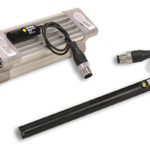
TMIThe TMI Series of non-contact linear position sensors from Novotechnik offers rod-style position sensors designed for integration into hydraulic and pneumatic cylinders.  Implementing the Novostrictive touchless magnetostrictive measuring process, these sensors measure positions using a passive position marker that can be moved as a free-floating element.

Additionally, the temperature coefficient of the transducer is extremely low due to the measuring principle, design, and selected materials. The low temperature coefficient, combined with a mechanically durable design, enables the TMI Series to be highly resistant to shock and vibration.These sensors are easily mounted in-cylinder through one end and attached to the cylinder with either a threaded flange or a plug-in flange. The screw-plug hole is an M18 diameter hole and the plug-in flange is 48 mm. A magnetic pick-up position marker is mounted on the application’s piston rod.

TMI Series sensors are available from stock in stroke lengths of up to 4,500 mm as well as custom lengths for volume applications.  The sensors operate under pressures up to 350 bar with peaks up to 530 bar.  They have an unlimited mechanical life, and linearity performance up to 30 μm.

Novotechnik.com

Position Feedback Cylinder

September 28, 2010 by  
Filed under Cylinders, Positioning sensors

The TD (transducer) Option position feedback sensor offers an internal Linear Resistive Transducer (LRT) for extremely accurate piston position sensing. It’s designed for applications where magnetic Reed and Hall effect switches are unacceptable. The TD Option provides a solution for applications where variations in cylinder stroke and speed are required. Available with bore sizes ranging from 1-1/8″ to 4″ and strokes lengths of up to 18″ this position feedback sensor is reportedly ideal for applications requiring real-time position monitoring.

External Construction

The TDH and TDP standard cylinder constructions differ depending on bore size. For instance, 1-1/8” and 1-1/2” bore sizes have an aluminum threaded rear head and an aluminum snap-ring front head. The 2” thru 4” bores come with a traditional snap-ring construction both front and rear. All bore sizes utilize stainless steel cylinder tubing with the exception of the 4” bore which use heavy wall brass tubing.

Internal Construction

TDP
Type “C” cylinders are constructed using low friction “U” cup seals and include a wear strip on the piston. These cylinders are primarily used in low pressure applications and where low-minimum breakaway is required.
Pressure Rating: 120 PSI (pneumatic only)
Breakaway: Approximately 2 to 3 PSI
Available Bore Sizes: 1-1/8”, 1-1/2”, 2”, 2-1/2”, 3” & 4”

TDH
TDH cylinders are constructed using Block-Vee seals and include double rod seals in the front head, except on the 1-1/8” bore. A heavy duty wear strip (bearing) on the piston minimizes friction and piston seal wear, and on side load conditions
reduces metal-to-metal contact. .
Pressure Rating: 200 PSI pneumatic or 500 PSI hydraulic
Breakaway: Approximately 10 to 15 PSI
Available Bore Sizes: 1-1/8”, 1-1/2”, 2”, 2-1/2”, 3”, 4”, and 5”

positionfeedbackcylinder2 copy
www.allenair.com

Valve Positioners For Pneumatic Actuators

August 2, 2010 by  
Filed under Actuators, Equipment, Positioning sensors, Valves

valve positionerSpirax Sarco’s EP5 and PP5 control valve positioners operate on the balanced forced principle providing a tested solution for accurate control valve positioning. Both types are simple to commission and maintain with a low air consumption and 0,2 to 1,0 bar and 4-20 mA input signal options.
The positioners are used with linear pneumatic actuators; comparing the output signal from a pneumatic controller (or transducer) with the valve position feedback, and varying the pneumatic output signal to the actuator accordingly. The valve position is, therefore, guaranteed for any controller output signal and the effects of varying valve differential pressure, stem friction and diaphragm hysteresis are overcome. The positioners can also be used where the controller output signals are of too low a magnitude to be used directly with high pressure actuators. A mounting kit is supplied for fitment to either columns or yoke in accordance with NAMUR standard. Safety covers are also provided.
The positioners can be used with Spirax Sarco’s actuator types PN9000 and TN2000 series, if required an intrinsically safe version is available.
www.spiraxsarco.com

Dual-sensor, Split-connector Cuts Cylinder Costs

Three areas where you can look to cut costs on pneumatic cylinder applications include installation time, cables, and the sensors used for detecting the piston’s position. For example, first consider the sensor in a standard cylinder. Most standard cylinders use proximity switches, either internal or external to the aluminum housing that detect special targets or magnets mounted on the piston. Unfortunately, these proximity switches can be relatively expensive, take up valuable space, and are difficult and time-consuming to install.

DualSensor MIB
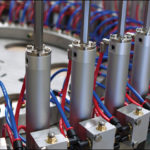
A dual-sensor, split-connector system coupled to a multiple-interface block (MIB) in a high-density application reduces the number of wires and potentially doubles the number of cylinder switches that can be used in the same installation.

A better solution is designed around a new dual sensor with a split connector. The configuration has two low-profile, magnetic-field sensors molded together into a single, four-pole connector. Compared to the standard application (where the end of the piston’s stroke is detected in both directions), the dual sensor system does the same job with one less connecting cable, fewer terminations, and less connective hardware, which require less time to install. This dual sensor arrangement can cut an application’s cost by 50%.

Dual Sensor 2
Even in a smaller application, a dual-sensor, split-connector system installed on a cylinder to detect the end of a piston’s stroke can reduce installation time and material costs compared to a standard two-proximity switch arrangement.

Dual Sensor on cylinder
A dual-sensor, split-connector system combines two magnetic-field sensors with a single connector. This approach uses only one four-conductor cable and less installation hardware with fewer terminations than the standard method.

In another installation where numerous cylinder switches are densely packed, multiple interface blocks (MIBs) are typically used to reduce the number of wires needed to return to the control panel. However, you get a bonus when you use a dual sensor system in the same installation: It doubles the number of cylinder switches that can be connected to the same MIB, or it cuts the MIB size in half for the same number of switches. Either way, your cost-cutting goal is realized.

Balluff
www.balluff.com/vtwin
jack.moermond@balluff.com

Enfield Technologies Makes Proportional Pneumatic Control More Affordable

Thanks to some innovative engineering, Enfield Technologies has reached an important goal – making a complete proportional pneumatic control system much more affordable.

Enfield Technologies

A basic positioning system includes a proportional valve and control electronics manufactured by Enfield Technologies paired with a pneumatic actuator and a position sensor provided by a variety of highly regarded partner companies. The same valves and control electronics used in motion control are also used for proportional pressure, flow, and force regulation applications.

During the last 18 months, Enfield Technologies has revised its sourcing and manufacturing processes. They have also reengineered several key products, adding new features, improving performance and reducing costs. This has allowed the company to offer price reductions averaging 42 percent on its primary components. For example, the LS-C10 controller dropped 70 percent, from $564 to $169.20, and the LS-V25s proportional valve dropped 45 percent, from $721 to $396.60. Enfield Technologies has also implemented volume discounts and an additional 5 percent bundle discount (bundle kits include a controller, valve and cable).

Enfield Technologies has added more than 35 technical resellers and integration partners over the last year. The company has also launched several new products, including the Enfinity System (C2 controller and M2 valves).

For more information, visit http://enfieldtech.com/affordable/

Enfield Technologies
www.enfieldtech.com

DUAL SENSOR FOR C-GROOVE CYLINDERS

tus 364 72dpi

BIM-UNR Dual Sensor (High-Res)

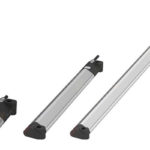
TURCK’s BIM-UNR line of compact magnetic cylinder position sensors now includes a dual sensor designed for detecting short and long stroke C-groove cylinders. BIM-UNR dual sensors provide a distinct advantage by combining two sensors through one cable connection to speed installation, as well as lessen wire costs and connection points. This design makes the sensor particularly beneficial in areas where multiple cylinders are used, as it only requires a single cable. With dimensions of 2.9 x 4.6 x 18 mm,

Delivering reliable performance and high EMC immunity, thisl sensor provides an exceptional alternative to ordinary cylinder position sensors. The sensor mounts within C-groove cylinders with no accessories required. Plus, it can be inserted into a C-groove from the top rather than from the side, further simplifying installation. On the sensor’s side is a built-in tab that keeps the sensor in place to facilitate one-handed mounting. As the mounting screw is located near the cable exit, the sensor remains fastened even if the cable is pulled.

TURCK

www.turck.us